Is Gandhinagar Still Affordable in 2026? Property Rates & Future Outlook
February 26, 2026
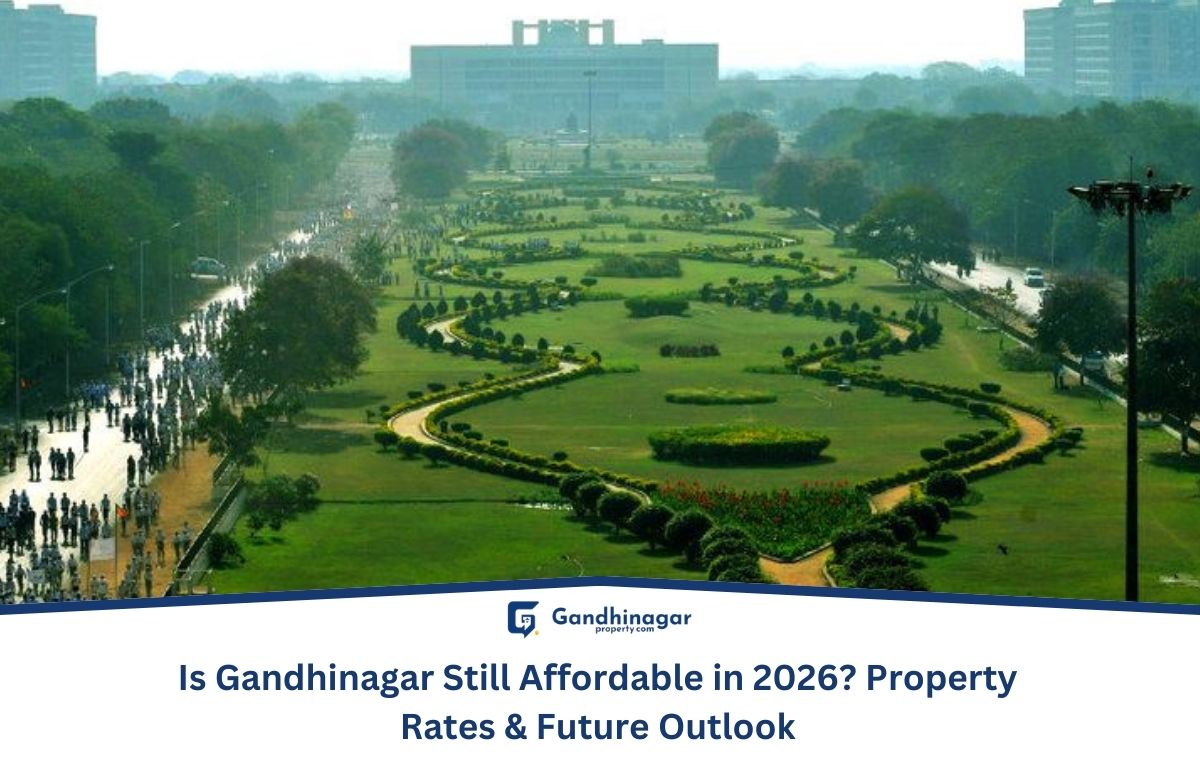

Gandhinagar has always been known as one of Gujarat’s most well-planned and peaceful cities. Wide roads, green surroundings, organised sectors, and strong civic infrastructure have made it an attractive destination for families and professionals alike.
Over the last few years, rising demand and rapid development have pushed property values upward. This brings up an important question in 2026 — is residential property in Gandhinagar still affordable?
The answer is not a simple yes or no. While flat prices in Gandhinagar have increased compared to five years ago, the city still offers better value compared to larger urban centres. The balance between affordability, quality of life, and long-term growth continues to make Gandhinagar a strong residential market.
Let’s take a deeper look at current property rates, locality trends, and the future outlook.
The Gandhinagar real estate market in 2026 is stable, active, and steadily growing. Unlike speculative markets that experience sharp spikes and crashes, Gandhinagar has shown consistent appreciation.
The demand for residential property in Gandhinagar is being driven by:
Government employees and administrative professionals
Families shifting from Ahmedabad for better living conditions
Investors seeking long-term capital appreciation
NRI buyers looking for stable property markets
Because the city is planned sector-wise, development is structured and controlled. This prevents overcrowding and supports steady price growth rather than sudden inflation.
Flat prices in Gandhinagar vary depending on location, amenities, and project quality. Below is a realistic price overview for 2026:
Average Range: ₹65 lakh to ₹75 lakh
Premium Projects: ₹80 lakh and above
Average Range: ₹75 lakh to ₹95 lakh
Luxury Projects: ₹1.2 crore and above
Starting from ₹1.75 crore
Premium sectors can go significantly higher
Compared to metro cities where similar properties cost nearly double, Gandhinagar still offers reasonable entry points for homebuyers.
Not all sectors are priced equally. Certain localities command higher rates due to connectivity and infrastructure.
One of the fastest-growing residential zones. Modern projects and proximity to commercial areas make it popular. Prices here are slightly higher but still competitive.
A well-developed locality with schools, hospitals, and markets nearby. Flat prices in Gandhinagar’s Kudasan area remain attractive for mid-range buyers.
Strategically located between Ahmedabad and Gandhinagar. Strong appreciation potential due to connectivity advantages.
Known for new residential projects. Offers a mix of affordable and premium housing options.
Central sectors remain stable with steady appreciation. Limited new supply often keeps prices firm.
Many buyers feel prices have risen sharply. But when we examine the reasons, the growth appears logical.
Improved roads, better connectivity, and urban upgrades have enhanced overall property value.
With more families preferring organised living spaces, demand for residential property in Gandhinagar continues to rise.
Planned development limits uncontrolled expansion. As available land reduces, prices gradually increase.
Rising material and labour costs directly impact flat prices in Gandhinagar.
This comparison is common among buyers.
Ahmedabad offers commercial vibrancy and larger city exposure. However, Gandhinagar provides better planning and lower congestion.
In many prime Ahmedabad areas, 3 BHK flats often exceed ₹1.2 crore. In Gandhinagar, similar configurations are still available below ₹1 crore in several sectors.
This pricing gap keeps residential property in Gandhinagar attractive for middle-income and upper-middle-income buyers.
Affordability is not just about purchase price — rental yield also plays a major role.
The rental market remains steady due to government offices, educational institutions, and corporate presence.
Approximately 2–3% annually, with slightly higher potential in prime locations.
Moderate and stable growth is expected over the next 3–5 years.
Investors seeking safe, long-term growth often prefer Gandhinagar over volatile markets.
Looking ahead to the next five years, gradual appreciation is expected rather than dramatic spikes.
Continued infrastructure upgrades
Expansion of residential projects
Improved connectivity between Gandhinagar and Ahmedabad
Rising demand for organised urban living
Flat prices in Gandhinagar are likely to grow at a sustainable pace. This makes 2026 a balanced time to enter the market before further increases.
Still manageable EMI structures compared to larger metro cities.
Families looking for larger homes at reasonable prices.
Stable appreciation with lower risk exposure.
A secure and regulated property environment.
No market is perfect. Buyers should also evaluate:
Slower appreciation compared to metro cities
Limited ultra-luxury inventory
Gradual, not aggressive, short-term returns
However, these factors also contribute to long-term stability.
If you are looking for speculative gains within a year, Gandhinagar may not deliver dramatic returns.
But if your goal is stable growth, quality lifestyle, and steady appreciation, residential property in Gandhinagar continues to present a strong opportunity in 2026.
Flat prices in Gandhinagar remain competitive when compared with infrastructure quality, city planning, and long-term potential.
Yes — Gandhinagar remains relatively affordable in 2026, especially when compared to major metro cities.
While prices have increased, they reflect infrastructure growth, rising demand, and improved living standards.
For buyers seeking balance between affordability and future value, Gandhinagar continues to offer solid potential.
The market is not overheated and not stagnant — it is steadily progressing. And that is often the healthiest sign for real estate investment.